

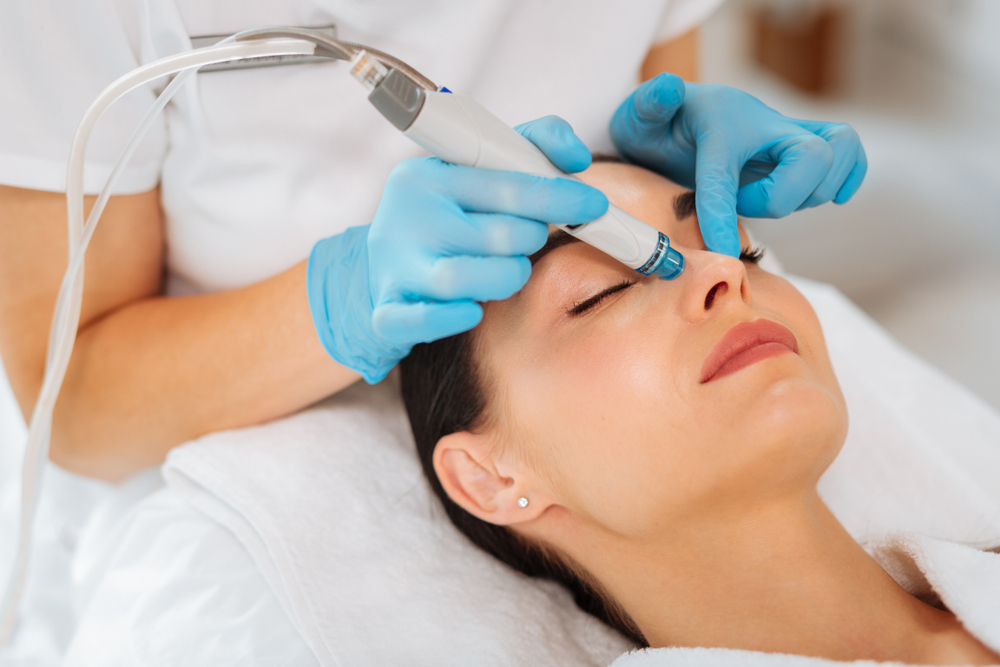
A HydraFacial is a patented skin treatment available in medical spas and dermatology offices. It’s also sometimes called “hydradermabrasion” because it involves microdermabrasion-like exfoliation paired with hydrating serums.
Known for its three-step process, the HydraFacial works to deep-clean, exfoliate, and hydrate your skin. This professional procedure may help treat a variety of skin conditions, including acne, dryness, and wrinkles.
The noninvasive procedure is similar in principle to a regular facial you might get from a spa but is said to provide more dramatic results. This is achieved by a mechanized wand used on your skin to deeply clean and exfoliate while delivering serums customized to your skin type.
If you’re curious about whether a HydraFacial is worth the hype, read on to learn more about the potential benefits, the possible side effects, and how it compares to similar treatments.
A HydraFacial is performed by either a licensed aesthetician or a dermatologist. The procedure is completed in three parts:
Your provider uses a vortex-like wand against your skin to help clear away dirt and oil from deep in your pores. They also use a peel to help exfoliate and resurface your skin.
Your provider uses a vacuum-like attachment on the wand to help extract debris from your pores.
Your provider uses a pen-like attachment to apply a moisturizing serum with antioxidants.
A HydraFacial is sometimes followed by other skin care treatments, such as dermal fillers or light therapy. These are considered add-ons and are not included as part of the HydraFacial.